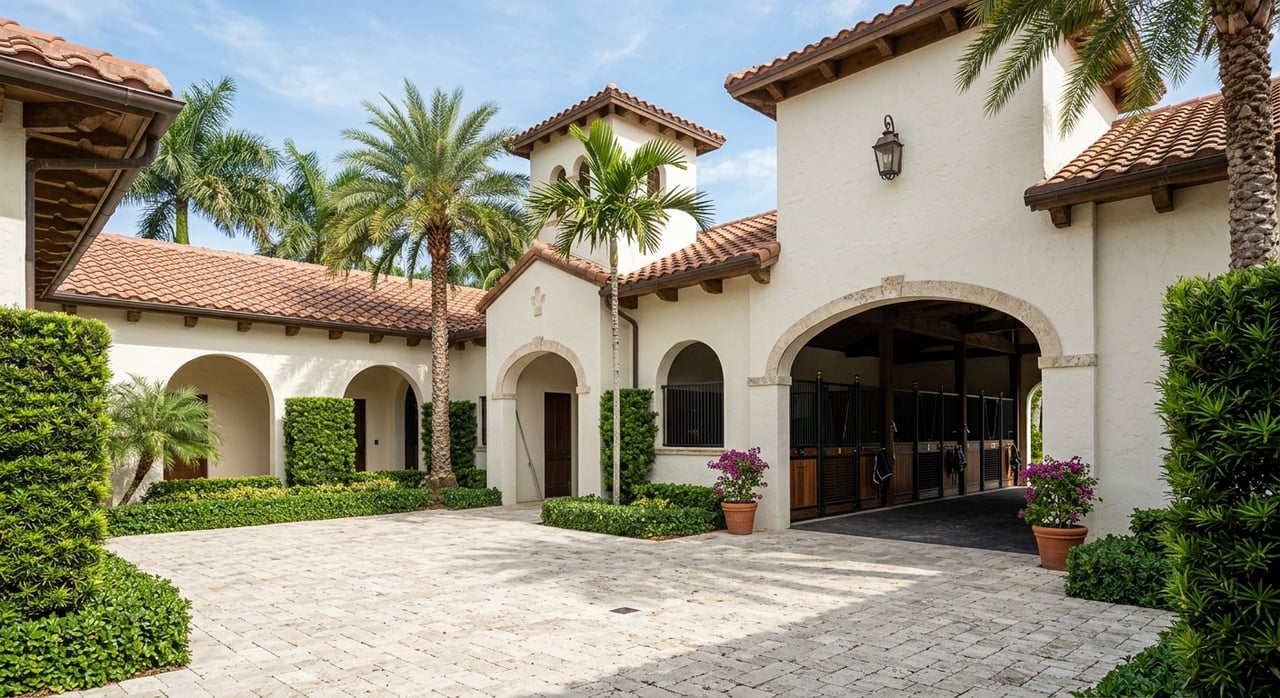
You came to Wellington for world-class riding and a seamless season. Now you need to figure out where to live, keep your horses, and plug into the local network. If you are new to the Village, the equestrian neighborhoods, trail access, and rules can feel complex. This guide gives you a clear, practical overview so you can choose the right community and avoid surprises. Let’s dive in.
Wellington at a glance
Equestrian Preserve and EOZD
Wellington protects its horse culture with a defined Equestrian Preserve Area governed by an Equestrian Overlay Zoning District (EOZD). The Village reports that the Preserve spans roughly 9,000 acres, with policies that prioritize bridle-path connectivity and equestrian infrastructure. You can review the Village’s equestrian overview for a quick orientation to the Preserve and related services at the official Equestrian Community page. For legal definitions and allowed uses, the EOZD is codified in the Land Development Regulations. The ordinance text is the best place to clarify what counts as an equestrian amenity or stall.
- Explore the Village’s equestrian overview: Wellington Equestrian Community
- See EOZD definitions in the LDR: EOZD ordinance text (Article 6, Chapter 10)
Bridle-path network
Wellington maintains an extensive bridle-path system that links neighborhoods with the showgrounds and polo fields. You will see different headline mileage figures on various Village pages because counts can include different combinations of public and private paths. As a buyer, focus on whether a specific property has direct access or a recorded easement to the nearest trail corridor. The Village’s Equestrian Trails Circulation Master Plan is the authoritative source for maps and inventory.
- Reference maps and inventory: Equestrian Trails Circulation Master Plan
Seasonality and core venues
Wellington’s winter season is built around the Winter Equestrian Festival (WEF) and the Adequan Global Dressage Festival (AGDF). WEF runs at Wellington International, with published prize lists and week-by-week schedules each season. Dressage operates at Equestrian Village during the same period. Polo remains a major draw through the National Polo Center, which the U.S. Polo Association acquired and rebranded in 2022. These venues shape daily logistics and real estate demand, especially for buyers who plan to show or run a training operation.
- Check current season details: Wellington International schedules and prize lists
- Learn about the AGDF venue: Equestrian Village venues page
- Polo facility background: USPA acquisition press release
Where to look: key equestrian neighborhoods
Every buyer prioritizes a different balance of ring access, acreage, privacy, and maintenance. Below is a plain-English overview of the neighborhoods most newcomers ask about, grouped by how they are typically used.
Closest to the showgrounds
Grand Prix Village
If you want door-to-ring access, this guard-gated enclave beside the main showgrounds is the benchmark. Properties are estate-scale, often with purpose-built barns, arenas, and staff housing. Private gates or dedicated bridle connections to Wellington International are common features. It fits professionals and owners who want to minimize daily travel.
Equestrian Club Estates
Also next to the showgrounds, this guard-gated neighborhood offers a compact footprint and a secure, low-maintenance base during the season. Lots are smaller than the large estate districts, which appeals to riders who value convenience and quick walks or golf-cart rides to the rings. It is popular for seasonal use and efficient operations.
Practical acreage within hacking distance
Saddle Trail Park
Saddle Trail Park is a long-standing equestrian area known for a network of bridle paths and riding routes that make the showgrounds accessible by hack. It offers a more rural feel within the Village, often without gates. Many buyers choose it for a balance of space, proximity, and day-to-day practicality.
Paddock Park I & II
These established neighborhoods feature boutique equestrian lots and family-scale farms. Buyers value the local bridle-path access and the ability to keep horses on property without the footprint of a trophy-scale farm. It is a frequent choice for riders who want quick access to venues while keeping daily upkeep manageable.
Estate-scale, gated acreage
Palm Beach Point
This guard-gated district is known for estate properties and substantial equestrian facilities. Buyers often prioritize privacy, larger barns, and generous turnout here. If you plan to host clients or need additional support infrastructure on site, this area frequently fits the brief. Verify each lot’s trail connection or recorded access before you buy.
Southfields and Mallet Hill
These are smaller, gated pockets with a mix of acreage and a long association with polo and higher-capacity equestrian uses. They attract buyers who want privacy, quality facilities, and straightforward access to the venues. The setting is quiet and fits operations that prefer a more contained environment.
A noted enclave to consider
Palm Beach Little Ranches
Village planning documents identify Palm Beach Little Ranches as an enclave in Wellington’s northeast corner. It sits outside the most concentrated showground area and is handled differently in certain connectivity programs. For buyers who want acreage in Wellington but are less focused on daily show access, it can be a smart alternative. Review the Village’s equestrian planning documents and maps to understand trail connectivity for specific parcels.
Critical services close by
Veterinary and emergency care
Sport horses need fast access to top-tier veterinary care. Palm Beach Equine Clinic operates as a full-service equine hospital in Wellington and serves as the official veterinary provider in practice at Wellington International events. Many buyers prioritize being within convenient reach of the clinic and confirming their emergency logistics before closing.
- Clinic resource: Palm Beach Equine Clinic
Farriers, feed, and training support
Wellington’s equestrian economy supports a wide network of trainers, farriers, tack suppliers, and hay and bedding vendors. The Village’s stall density and mapped barns in the Equestrian Trails Master Plan reflect this concentration. If you are relocating a program, plan ahead for vendor onboarding and delivery timing during peak season.
- Market-level maps: Equestrian Trails Circulation Master Plan
Rules and permits you should know
EOZD basics
Inside the Equestrian Preserve, the EOZD governs how you can develop and use your property for equestrian purposes. The Land Development Regulations define terms like stall and equestrian amenities, and they outline which uses are permitted, conditional, or prohibited. Because rules can vary by subarea and may be updated, always confirm details with Planning and Zoning and read the current ordinance text.
- Read the EOZD section of the LDR: EOZD ordinance text (Article 6, Chapter 10)
RVs and temporary housing
Village records note that the EOZD had allowed temporary RV residency on properties of 5 or more acres with an Equestrian Permit. Subsequent amendments have aimed to clarify and unify related rules. Because permit conditions and lengths can change, do not rely on hearsay. Verify current language with the Village or your attorney before planning housing for staff or clients.
- See a recent staff report reference: EOZD text amendment review
Manure storage and BMPs
Wellington emphasizes best-management practices for livestock waste to protect canals and stormwater systems. Manure bins must be covered and designed to prevent runoff to waterways. Before you close, confirm that a property’s current setup meets Village expectations and any HOA standards.
- Check Village guidance: Wellington FAQs
Seasonal use permits for venues
Major venues operate under seasonal permits and recorded resolutions that define hours and activities. If your plans depend on specific dates or operations near a venue, review the current season’s public records. Your agent can help you source the right documents through the Village’s Legistar system.
Quick buyer checklist
Use this as a starting point for due diligence. Your situation may call for deeper review with counsel and the Village.
- Confirm the property’s location within the EOZD and any subarea rules. Start with the LDR’s EOZD definitions and ask Village Planning and Zoning to verify.
- Map bridle-path access. Does the lot have a direct trail connection or a recorded easement to the network shown in the Trails Master Plan? Do not assume access based on proximity alone.
- Verify stall counts and manure storage. Check that actual stall counts match plans and that manure bins meet the Village’s BMP expectations for coverage and runoff control.
- Inspect arenas and footing. Ask for dimensions, footing type, drainage design, warranties, and maintenance records. All-weather systems are expected for performance horses.
- Review utilities and storm readiness. Confirm generator capacity, hay and bedding storage, and a clear hurricane plan for animals and people.
- Read HOA or deed restrictions. Check resale packets and CC&Rs for any limits on boarding, training, number of animals, or exterior improvements. Private rules can be stricter than Village code.
- Plan veterinary access. Confirm routine and emergency logistics with Palm Beach Equine Clinic or your chosen provider.
- Budget for operations. Feed, bedding, farrier, vet, staffing, arena upkeep, and drainage add up. Costs vary by scale and whether you board on or off property.
How to choose your fit
Start with your day-to-day goals. If you expect to show daily during peak season, neighborhoods beside the showgrounds reduce travel time and simplify staffing. If you need more space for a larger program, estate-scale districts can deliver capacity and privacy. If you value a quieter setting with practical access, look at established acreage neighborhoods with proven bridle-path connectivity.
Next, map your workflow. Where will you ride each day, how will horses move to and from the rings, and who needs on-site housing? Build your shortlist around those logistics. Then layer in due diligence on zoning, permits, and HOA rules so you know exactly what you can build and how you can use the property.
Finally, line up your support network early. Vendors book quickly during the season. Engage your farrier, feed supplier, vet team, and arena maintenance support before peak weeks so your program runs smoothly from day one.
If you want an experienced, discreet advisor who speaks both equestrian and finance, we can help you evaluate options on and off market, confirm the fine print, and negotiate with confidence. For confidential guidance and Private Market opportunities, connect with Frank Herz - Main Site.
FAQs
What is the Equestrian Overlay Zoning District (EOZD) in Wellington?
- The EOZD is the Village’s land-use overlay that governs allowed equestrian amenities and uses inside the Equestrian Preserve; you can review definitions in the Land Development Regulations.
How extensive is Wellington’s bridle-path network for riders?
- The Village maintains an extensive system connecting neighborhoods with venues; because totals vary by what is counted, check the Equestrian Trails Master Plan for current mapped paths.
Where can I find official dates for the Winter Equestrian Festival?
- Wellington International publishes season schedules and prize lists; rely on those pages for the current calendar and week-by-week details.
Are RVs allowed on equestrian properties during the season?
- Village records indicate prior allowances for temporary RV residency on larger parcels with an Equestrian Permit, but rules change, so confirm current conditions with the Village.
What veterinary services are available near the showgrounds?
- Palm Beach Equine Clinic operates a full-service equine hospital in Wellington and serves as the official veterinary provider in practice at Wellington International events.
Do I need a permit for manure storage or specific bin designs?
- Wellington requires manure storage to meet best-management practices that prevent runoff; verify compliance with the Village’s guidance and any HOA rules before closing.