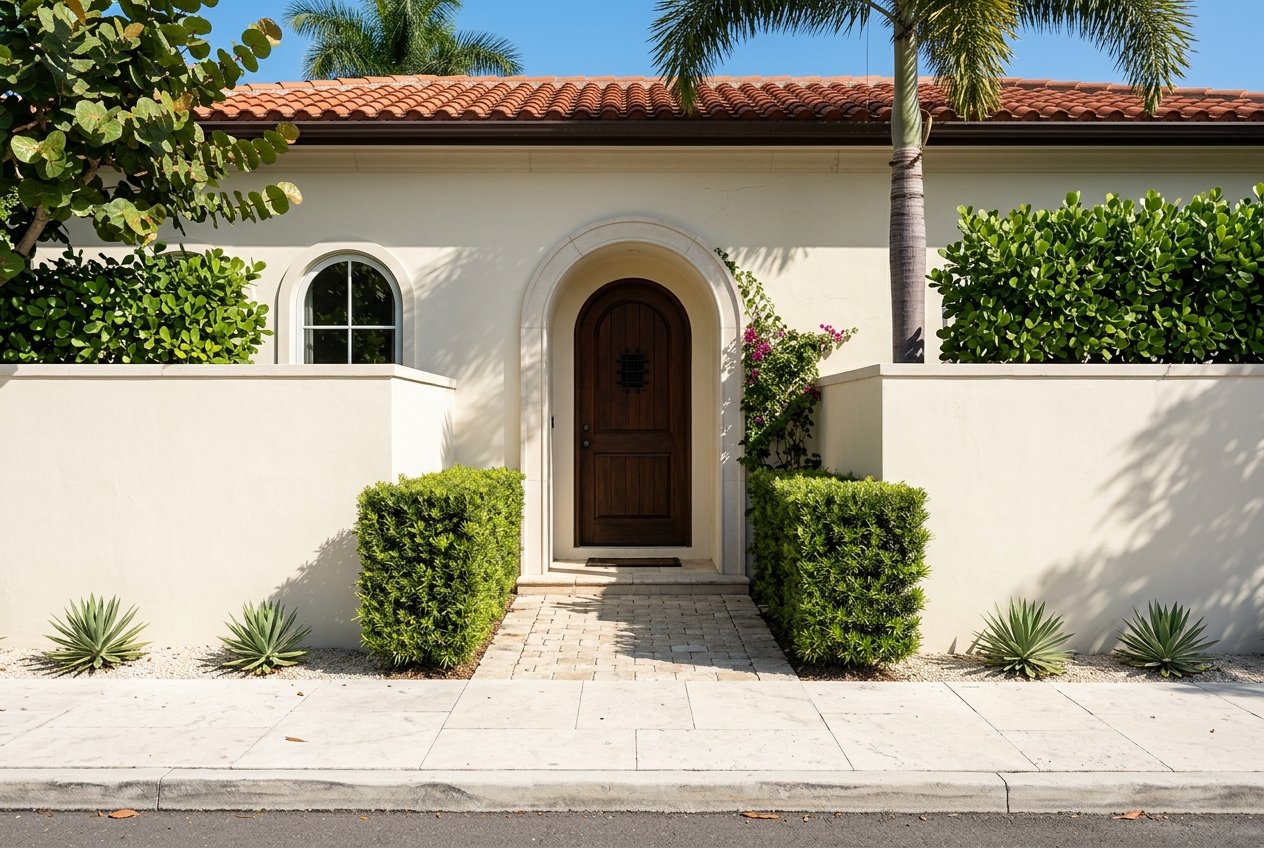
Are you choosing between a front-row seat to the Atlantic and a more connected daily life near Palm Beach’s town core? That decision sounds simple on paper, but in Palm Beach, the difference between oceanfront and in-town estates shapes everything from your morning routine to your maintenance obligations and eventual resale strategy. If you are weighing both options, this guide will help you compare lifestyle, ownership demands, and market positioning with a clear Palm Beach lens. Let’s dive in.
Defining Oceanfront and In-Town
In Palm Beach, in-town generally refers to the blocks around Worth Avenue, Royal Palm Way, South County Road, and Peruvian Avenue. This is the area the town identifies as its retail and civic core, with Town Hall nearby and docks within walking distance of parts of the district.
Oceanfront generally refers to Atlantic-facing parcels along South Ocean Boulevard and the beachside edge of the island. These homes are defined by direct coastal orientation, beach adjacency, and exposure to the shoreline environment.
That distinction matters because the two settings offer different daily experiences. In many Palm Beach conversations, buyers compare them as if they are interchangeable luxury products, but they usually serve different priorities.
Oceanfront Lifestyle Advantages
If your vision of Palm Beach starts with water, views, and direct beach access, oceanfront has the clearest appeal. These properties offer the strongest Atlantic identity, with horizon lines and immediate proximity to the shoreline that in-town homes usually cannot match.
For many buyers, that appeal is emotional as much as practical. You are buying the sound of the surf, changing light over the water, and a strong sense of separation from inland life.
Views and Beach Access
Oceanfront estates tend to win on direct Atlantic exposure. If your priority is waking up to open water and stepping out toward the beach, this category offers the most obvious fit.
That does not automatically mean every parcel feels the same. View corridors, dune height, setbacks, and site design can all shape how much of the shoreline you actually experience from the house.
Strong Beach-House Identity
Oceanfront homes also deliver the most distinct beach-house identity in Palm Beach. If you want a property that immediately reads as a coastal estate, this is usually where that feeling is strongest.
That can matter on resale as well. In a niche luxury market, a home’s identity and differentiation often carry real weight with future buyers.
In-Town Lifestyle Advantages
If your ideal Palm Beach routine includes walking to shops, restaurants, docks, and services, in-town estates often have the edge. The area around Worth Avenue and nearby streets functions as the town’s most convenient daily-use core.
Palm Beach overall is considered car-dependent, with a Walk Score of 21 out of 100. Even so, certain in-town addresses offer meaningfully better on-foot convenience than many oceanfront parcels.
Better Daily Convenience
In-town living tends to support a more connected daily pattern. You may be closer to Worth Avenue, South County Road, Peruvian Avenue, and nearby town destinations, which can make short errands and casual outings easier.
That convenience can be especially valuable if you use the property frequently rather than only for occasional stays. It can also reduce the friction of everyday logistics, which is not always obvious during an initial property tour.
More Buffered Setting
In-town estates often trade some horizon view for garden, courtyard, or streetscape character. For some buyers, that feels calmer and more private in day-to-day living.
Rather than facing the most active edge of the shoreline, you may have a more buffered experience. That can appeal to owners who want Palm Beach prestige without making the beach the center of every aspect of ownership.
Privacy Depends on the Exact Address
One of the biggest misconceptions in Palm Beach is that oceanfront always means more privacy. In reality, privacy is highly address-sensitive.
Oceanfront homes may be closest to the beach, but they can also sit near public beach use, beach-access points, and periodic shoreline work. The town has recently posted closures at beach access points and updates tied to Mid-Town renourishment activity, so the practical experience can vary by parcel and timing.
What Shapes Privacy on Oceanfront
On oceanfront properties, privacy often depends on:
- Dune height
- Setback from the shoreline
- Landscape screening
- Placement of neighboring access points
- Traffic patterns near the parcel
So while oceanfront can absolutely feel private, the answer is rarely found in the label alone. It requires close parcel-level review.
What Shapes Privacy In-Town
In-town privacy is different. Instead of shoreline exposure, the feel of privacy may come from lot configuration, hedges, walls, courtyards, and the rhythm of the surrounding streetscape.
For some owners, that controlled, layered setting feels more predictable. For others, it lacks the open-sky experience that makes Palm Beach oceanfront special.
Ownership and Maintenance Are Very Different
Both options are premium assets, but they carry different maintenance profiles. That distinction should be part of your decision from the start, especially if you value low-friction ownership or hold multiple residences.
Oceanfront ownership usually carries the heavier coastal burden. In-town ownership can involve more design and review process, especially for historically significant properties.
Oceanfront Maintenance and Coastal Issues
Palm Beach County uses dune restoration, inlet sand transfer, sand renourishment, and support structures to address beach erosion. Nourishment projects are only permitted from November 1 through May 1, with special monitoring required after March 1.
The Town of Palm Beach has also posted updates on active renourishment work, dune restoration, and temporary beach-access closures tied to erosion conditions. For you as an owner, that means coastal conditions are not background noise. They are part of the operating reality.
Flood Zones and Insurance Review
Oceanfront buyers should verify the exact parcel’s flood zone, elevation, insurance implications, and shoreline-condition history. FEMA identifies Zone VE as a coastal high-hazard area where wave action and fast-moving water can cause extensive damage during a base flood event, and Palm Beach County notes that coastal areas are susceptible to storm-surge flooding.
This is one reason oceanfront purchases benefit from very detailed underwriting and diligence. At this price point, broad assumptions are rarely enough.
Lighting and Coastal Regulation
Palm Beach County also requires beachfront-lighting review in sea turtle protection zones. Artificial light can disorient nesting turtles from March through October, so exterior lighting plans may need special care on affected beachfront properties.
That does not make oceanfront ownership harder across the board. It does mean the details matter, and they matter early.
In-Town Review and Preservation
In-town estates have a different kind of complexity. Palm Beach requires development review through the Landmarks Preservation Commission for landmarked or historically significant properties, and through ARCOM for non-landmarked design review.
The town says more than 328 landmark properties, sites, and vistas are protected. So if you are buying in-town for architectural character and established streetscape, you should also expect that future changes may involve a more formal review process.
Resale Depends on Rarity and Fit
Palm Beach is a high-value market, but it is not necessarily a fast one. MIAMI Realtors reported that Palm Beach town’s luxury median sales price reached $13.8 million in Q1 2025, while single-family inventory measured 18.9 months of supply.
That is notably higher than nearby West Palm Beach at 7.2 months and Boca Raton at 5.3 months in the same period. The takeaway is not that Palm Beach is weak. It is that the island behaves more like a selective niche market.
A Patient Luxury Market
Redfin’s March 2026 snapshot showed Palm Beach homes selling in about 119 days on average, with a median sale price of $2.7 million, and described the market as not very competitive, with multiple offers rare. In practical terms, this supports a more patient, analytical resale strategy.
For both buyers and sellers, the key question is often not which category sells faster. It is which property is more differentiated, how specific the buyer pool is, and how carrying costs interact with timing.
Oceanfront Versus In-Town on Resale
Oceanfront may draw buyers who place a premium on direct water exposure and beach identity. In-town may attract buyers who prioritize convenience, architectural character, and a more buffered living pattern near the town core.
Neither category is universally better on resale. In Palm Beach, value often comes down to exact location, view geometry, condition, privacy, and how clearly the property matches a buyer’s lifestyle goals.
Which Option Fits You Best?
If you are deciding between the two, start with your actual use case instead of the headline. The best Palm Beach purchase is usually the one that matches how you want to live, how much complexity you want to manage, and how long you expect to hold the asset.
A simple framework can help.
Oceanfront May Fit You If
- You value direct beach access and open Atlantic views
- You want the strongest coastal estate identity
- You are comfortable with higher coastal diligence and maintenance demands
- You see the property as a long-term trophy asset or legacy hold
In-Town May Fit You If
- You want easier access to Worth Avenue and the town core
- You prefer a more walkable daily routine within Palm Beach standards
- You value garden, courtyard, or architectural character over pure horizon view
- You want a more buffered living environment
The Palm Beach Decision Is Personal
In Palm Beach, oceanfront and in-town estates are both premium choices, but they are premium for different reasons. One leans toward direct Atlantic exposure and a stronger beach-house identity. The other often favors convenience, walkability, and a more layered daily living experience near the center of town.
The smartest way to compare them is not to ask which is better in general. It is to ask which one fits your lifestyle, maintenance appetite, privacy expectations, and exit horizon with the least compromise.
If you are evaluating a purchase or preparing a sale in Palm Beach, a parcel-level strategy matters. For discreet guidance, valuation insight, and private-market perspective, connect with Frank Herz - Main Site.
FAQs
What defines an in-town estate in Palm Beach?
- In Palm Beach, in-town usually refers to the area around Worth Avenue, Royal Palm Way, South County Road, and Peruvian Avenue, which the town identifies as its retail and civic core.
What defines an oceanfront estate in Palm Beach?
- Oceanfront generally refers to Atlantic-facing parcels along South Ocean Boulevard and the beachside edge of the island, where direct shoreline exposure and beach access shape the ownership experience.
Which Palm Beach option is more walkable: oceanfront or in-town?
- In-town estates usually offer better walkability because they are closer to Worth Avenue and other town-center destinations, even though Palm Beach overall is considered car-dependent.
What maintenance issues matter most for Palm Beach oceanfront homes?
- Oceanfront owners should pay close attention to erosion conditions, dune restoration, renourishment activity, flood-zone details, elevation, insurance implications, and parcel-specific shoreline history.
What review process affects Palm Beach in-town estates?
- In-town properties may be subject to review by the Landmarks Preservation Commission if they are landmarked or historically significant, or by ARCOM for non-landmarked design review.
Is the Palm Beach resale market fast for oceanfront and in-town estates?
- Palm Beach tends to behave like a selective luxury market, so resale is often more patient and property-specific than in nearby markets such as West Palm Beach or Boca Raton.